WRITER • READER • RUNNER • RUMINATOR

Category: Nonfiction Page 2 of 3

Yellowface – Review

 BY R.F. Kuang

I’ve read great satire before. I also read plenty of books on writing and publishing. The blend of this style and these subjects in RF Kuang’s novel Yellowface makes it un-put-downable, especially for writers/authors. Allow me to make some observations: – Satire comes off best when the author appears to poke fun at themselves. Mark Twain’s prose in The Innocents Abroad wouldn’t have had the same bite if written by Oscar Wilde (notwithstanding the fact that Wilde would have been 15 years of age at the time of publication.) Yellowface’s humor bowls the reader over both because of HOW she wrote it and because SHE wrote it. Way more powerful than if written by Emily Henry who I admire as a humorous writer who has written about the publishing industry. – Some readers read satire for satire’s sake, but Kuang goes further. A well-known author once taught in a workshop that a book has to contain absolute truths (facts,) but will be remembered for its profound truth (the reader being able to picture themselves dealing with a similar conflict.) Fact: Diverse voices have been overlooked before in publishing. Fact: The industry is attempting to resolve this. Fact: If you’re not bringing diversity to the table, there are fewer opportunities for publishing work.

But here’s the profound truth that Kuang displays to readers–how would you react to these absolute truths if the changed publishing environment affected you, personally, as a writer? – I scanned a couple of other reviews that complained the translation of social media posts to the print version of Yellowface was awkward. Pro tip: listen to this book on audio! The pacing, tension, and transitions are all seamless. Here’s my take–satire makes the reader laugh but also has the serious purpose of highlighting societal dilemmas. The author isn’t obligated to solve the issue. Instead, their job is to put it into a form we can talk about. Kuang does this brilliantly in a page-flipping, fun, read. Thank you!

A Fever in the Heartland – Review

 BY TIMOTHY EGAN

Timothy Egan, author of “The Worst Hard Time” has put together another deep dive into a dark and turbulent chapter of American history. His latest bestseller, “A Fever in the Heartland,” focuses on the rise of the Ku Klux Klan during the Roaring Twenties. At the epicenter of this disturbing tale looms the enigmatic personality of D.C. Stephenson, a man whose charisma and cunning tactics eventually put him in the position of Grand Dragon of the KKK in Indiana, where he served as the chief architect of the Klan’s explosive expansion across the Midwest.


Egan presents Stephenson’s character as a study in paradoxes—the Klansman bore a magnetic presence, and deftly tailored his life story to suit his ambitions. His influence was monumental, and the KKK’s xenophobic, hateful ideology gained traction, mainly through his use of the age-old tools of power–violence, graft, demagoguery, and back-scratching.


In the backdrop of the Klan’s ascension, a seemingly powerless figure, Madge Oberholtzer, emerges as an unexpected agent of change. Egan explains how her tragic fate becomes intertwined with Stephenson’s, leading to a dramatic revelation of his true character–that of a sadistic sexual predator. It is her harrowing testimony and the trial that follows that eventually brings the Klan to its knees.


Egan’s a brilliant storyteller. He paints a vivid and haunting picture of an era marked by hatred, intolerance, and the dangerous charisma of a man who harnessed these forces to advance his own ambitions. “A Fever in the Heartland” is a must-read for the youth of today.


Why? Because although the issues might change, there will always be leaders lacking in character but swollen with ambition who will stoke the fires of intolerance for their own end. Egan calls those people symptoms of the problem, not the problem itself. That might be true, but I argue we can use those symptoms to recognize an impending perilous path for our country.


Watch for this: a charismatic personality who tries to use controversial rhetoric to win over the working-class/rural population while simultaneously banning party dissent. Throw in allegations of misconduct ignored by that same personality because they feel they are above the law.


These are symptoms of a problem. Character trumps all when it comes to leadership. If you can’t point to a leader and tell your kids “This is who you should aspire to emulate,” then you can’t listen to that same leader, even if they seem to make sense.

In Whom Do We Trust?

In Whom Do We Trust?

In early January 2003, I command a squadron of over 500 operations and maintenance personnel and 18 C-130 transport aircraft based in Little Rock Air Force Base, Arkansas. Our mission is to deliver combat troops and supplies anytime and anywhere, either by parachutes out the back end of the plane, or by landing on whatever flat surface is available. A mantle of trust drapes my shoulders. My loyalty is unquestionable, but I’m hesitant to reciprocate that trust. 

I’m cynical about a war twelve years earlier, where we declared victory but allowed a tyrant to resume his role as the leader of Iraq. I’m jaded over a presidential election that took the US Supreme Court weeks to adjudicate. I’m frustrated because I just returned from a deployment to Afghanistan where it seems our country is no closer to finding the mastermind of 9-11, and instead, appears to be manufacturing reasons to shift our focus from Osama bin Laden to Saddam Hussein. Poised at the prime of my operational career, I’m so wrapped up in how to keep my team at the leading edge of the fight that I offer nothing but complaints towards those working at the strategic level. When anyone over the age of fifty tries to give me the big picture, I stare at them like they’ve got a dick growing out of their forehead.


My midday summons to my commander’s office doesn’t help.


“I don’t have the details. All I know is we’re not stopping short this time. Be prepared to head out in less than a month. Questions?” My boss might be under the age of fifty, but his lack of specifics about our upcoming deployment just outside the border of Iraq inspires little confidence.


I stride across the street to my squadron, mulling over my boss’s words. So much for commander’s intent. The only useful information I cull from our meeting is I need to have my squadron ready to deploy to the Middle East in less than a month. I smile, then check to see if anyone’s watching the newest squadron commander talking to himself. I don’t need more guidance. I might not control where we’re going and what we are fighting for, but I’ve sure as hell got a unit that knows how to get out of Dodge, set up an operating base, and get shit done.


We spend the next five weeks prepping the crews with airdrop training at night and short-field landings on unimproved surfaces. My ops officer runs that training and I make sure I hop in the aircraft commander’s seat enough that I’ll be ready to fly in the lead wherever we end up going. I study the crews flying with me. Although I am the senior and most experienced aviator in the unit, commander duties keep me out of the cockpit and on the ground more than other pilots. I need a crew that’s been flying their asses off. Not just to make up for my recent lack of flight hours, but also because when the shit hits the fan, I need a crew I can bond with—one that I trust.


The basic crew on a C-130 is six: pilot, copilot, navigator, flight engineer, and two loadmasters. We’ll probably take a mechanic if we land in the combat zone, but I’m not worried about who that will be. My maintenance leaders will send me the best airman they got. I’ve already filled most of the flying crew, as well. My enlisted positions are senior NCOs that earned their rank through performance and common sense. My navigator used to fly with me in my last unit when I was a major. The toughest decision I make before departing our home base is who will be my copilot—my number two. My staff recommends two lieutenants to fly with me before we leave—so that I can make the choice myself. Andy Smith and Deanna Franks.


My ops staff assumes I’ll pick Andy. I suspect the only reason they don’t just assign him to me is so I’ll think I’m deciding and not them. Andy’s a good ol’ boy with a reputation for smooth flying, a raunchy sense of humor, and the ability to make a crew bond quicker than a middle-schooler’s tongue on a frozen flagpole. You can count on him to buy the first round, know the name of the girlfriend of the youngest guy on the crew, and fly better than half our aircraft commanders. A week before we leave, I take him out on a night tactical airdrop training mission and let him fly the plane for twenty minutes in formation. The rumors about his flying instincts are true. Hands of glass.


On the run-in to the airdrop, I run our plane one hundred feet higher than we plan. I do it on purpose, gauging Andy’s reaction. He doesn’t say a word. He is supposed to—the copilot keeps the pilot on airspeed and altitude while backing the navigator up to make sure the plane is going in the right direction. On the return flight to base, Andy rips a fart, tells a bad joke, and has the whole crew laughing—including me. We have an hour left on our mission and are scheduled to practice short-field landings using our night-vision goggles. This is an aircraft commander qualification and I’m the one doing the landings. After the whole ‘silent Andy’ thing with my airdrop altitude, I consider coming in high on the short-field landing just to see if he will point it out. But these night assault landings are nothing to mess around with, so I table that plan.


I screw it up anyway—carrying too much speed across the overrun. When I pull the power, we float out of the zone, my wheels touching six hundred feet down the runway instead of the required five hundred feet or less. I should take it around, but don’t. Mashing the brakes, I lift the throttle handles and pull them into reverse, bringing the plane to a stop.


“Nice, Sir!” Andy bobs his NVGs up and down like an agreeable grasshopper. “You just got it in the zone.”


An endorphin rush blooms in my chest and I quell it. The hardest thing about command isn’t the increase in responsibility, but the people always telling me what an expert pilot I am, calling me an awesome commander, and hinting how much they like me. Every time it happens, I get that rush; and it takes all my effort to remind myself I’m not invincible just because I’m in command.


Am I wrong about my botched landing? Did I land in the zone? I turn to our flight engineer, who sits behind and between us pilots. His goggles sway back and forth. Truth. I landed long. 


Two nights later, I fly the same profile with Deanna Franks, my other copilot candidate. Deanna’s reputation precedes. When it comes to hands-on flying, everyone in the unit considers her the best copilot. She won the Triple Nickel Award in flight school for flying an evaluation where she was never more than five knots off airspeed, fifty feet off altitude or five degrees off heading for the hour-long flight.


But she’s also known for what she’s not. Not one of the guys. Not like she acts anti-social or anything, but she just doesn’t seem to be interested in playing the game when it comes to aircrew hijinks. The jokes about each other’s mothers disappear, nobody burps, and if someone has to cut loose after a round of bad burritos, you can be sure no one else will laugh about it.


Our airdrop mission with Deanna goes on time and on target. I don’t get the chance to test her reaction to my flying one hundred feet high because she never lets me. At fifty feet error, she calls it out, and I return to altitude. When the navigator mixes up on a turn, Deanna knows exactly where we are and steers us back on track. I let her fly the plane home, and she flies a rock-solid formation lead. When complimented in debrief, I fess up and tell the other two crews the copilot was flying, not me.


I decompress with a beer at home, my usual method for sleep enhancement, and ponder who I want flying in my right seat. Andy’s good. I like him and so does the rest of the crew. He might be just what we need to bring our crew together for the mission. But what is that mission? I’m not convinced our nation’s leadership knows. My boss across the street claims not to know. All I can do is trust my crews will do the right thing when they finally find out what that thing is.


“Nice, Sir!” Andy’s praise after my botched landing rings in my head. Fucking can’t trust him, either.

My crew—with Deanna in the copilot’s seat—deploys to Oman a week later, and we shuttle supplies around the Gulf, waiting for the war to start. I get the call to grab a flight to Qatar, where headquarters plans the mission everyone’s whispering about. At the end of the day, I fly back to Oman with big news for my unit. We’re going to lead 50 C-130s over the top of Baghdad International Airport and airdrop paratroopers and equipment from the 82nd Airborne for the initial invasion of Iraq. 

The planners pick a date at the end of the following week—a night with the least amount of moon. The last thing we want is to be highlighted across the Baghdad sky like Santa’s reindeer, our slow-moving aircraft easing pickings for Iraq’s antiquated anti-aircraft artillery. I brief my unit on the mission early in the day so we can use the afternoon for sleep before our late-night alert.


The wake-up happens on time, a hand shaking my shoulder, rousting me from atop a dank sleeping bag spread across my cot. My crew only suspects something is off when we enter the operations building. Instead of a crowded room of bleary-eyed aircrew, it’s just us—my crew of six. When I ask the obvious question, no one knows why—only what. My tactics shop gives us the lowdown.


“The mission over Baghdad has changed. No more airdrop. They’ve found an Iraqi Air Force runway called Tallil that we can use. It’s only a half-hour flight into Iraq from the Kuwaiti border. We think the runway is clear. You guys are going to take a runway-opening team in tonight and everyone else is going to fly up to Kuwait, pick up the Army dudes, and fly them in behind you.”


I nod. “What happened with the airdrop? Why the last-minute change?” The captain briefing me that the start of the war has completely changed in the last eight hours was twelve years old the last time we attacked Saddam Hussein. Should I call headquarters and check myself? I take a breath. These are my guys…trust them.


“Fuck if we—sorry, Sir. They haven’t told us why. They just sent all the planning stuff and told us to do this. When you pick up the team in Kuwait on your way in, the Army intel team there is supposed to give you more information on the field.”


“Anybody tell the loadmasters? They’re going to need to re-rig everything in the back end of the plane.”


My young captain, he of the errant F-bomb, turns to his planning partner and raises his eyebrows. The other guy shrugs.


“Shit. I don’t think so, Sir. We’ve been working on this.”


I turn to my copilot, Deanna. “Go let them know the new mission. Chad and I will start planning.”


“Got it, Sir.”


I’ve not questioned my final copilot decision once on this deployment. Deanna’s flying continues to be flawless and when they told us our crew would lead the assault on Baghdad, she buried herself in the planning, memorized the mission, and emerged as the leader of our group of copilots. The reason I can send her out to the ramp to pass a message instead of planning this new mission into Iraq is because I know she’ll tell the loadmasters exactly what they need to know and she’ll instantly catch up when she returns to help plan.


Three hours later, we’re airborne out of Kuwait, after loading up the runway-opening team and their trailer. Intel updates us on the Iraqi runway status while we load the plane. Best they can tell, the runway surface is rough, with potholes and loose gravel, but there’s no evidence they’ve erected any obstacles to discourage planes from landing. Of course, the photos are several days old.


We run our combat entry checklists, don our night-vision goggles, and drop to three hundred feet above the desert floor. It’s dark—pitch black. Something to do with that original plan of picking a moonless night, I remind my crew. Now that we’re going in low, I’m wishing we had a bit of moonlight so the night goggles would work better. I set my radar altimeter at 250 feet so I’ll have a warning if we inadvertently descend too low. The desert air—fetid, like we’re picking up the smell of the shit used to fertilize village crops—jets from the vents, but fails to prevent the sweat soaking the inside of my body armor.


Fifteen miles from the field, the terrain features pop out in black and green contours. The city of Nasiriyah lies just northeast of our runway, its lights confirming we’re on course, and the gunfire flashes in and around the town remind us we’re not in Kansas anymore. They also remind me that headquarters was wrong about no fighting reported near the airfield. We turn early to intercept the runway course and as we roll out on a seven-mile final, our navigator lets us know he’s picked up the landing surface on his ground-mapping radar.


At five miles to go, I yank the throttles to idle, slowing the aircraft to a speed that allows us to drop our landing gear and flaps. As the airspeed drops to 130 knots, I spot the runway in front of me and point the aircraft toward the first hundred feet, while scanning down the strip for obstacles.


“How’s the runway look?” I call over the intercom.


The navigator leans over Deanna’s shoulder and keys his mike. “Looks clear.”


I start out of the three-hundred-foot altitude I’ve maintained since the border on a three-degree glide slope toward the landing zone. It’s not like we have to land in a five-hundred foot zone for this mission, but I need an approach that allows me to stop quickly if we encounter an obstacle or take the plane back in the air if we call it off.


Passing through a hundred feet, Deanna breaks from the checklist. “Bank left! Land there!” she calls out—not in a panic, but not tentatively either. She’s giving me an order.


I get the adrenaline rush again, but this time it’s not from someone providing praise, but from the fear of being wrong. What if Deanna is wrong? But there’s no time.


I roll the lumbering cargo plane into a thirty-degree bank turn and then immediately counter-roll to line up with whatever Deanna’s finger points at. A broad, paved surface opens in front of me and I’m already in a flare when I realize what’s happened. We’d lined ourselves up on radar on the long, narrow taxiway, thinking it was a runway. When we were close enough to identify it, we’d seen what we wanted to see—a long paved strip—and missed the fact that there were several equally long strips to the left of it, including the main runway.


As the wheels touch down, I smash on the brakes, cover the nose steering wheel with my hand and turn my head slightly toward Deanna. “Thanks for—”


“Pothole on the right. Turn your way!”


I whip my head back to the runway and twist the nose steering wheel gently, angling away from the hole, and bringing the aircraft to a stop. My heart still pounds, but the cramping in my gut has disappeared. We’re on the ground.


The next thirty minutes seem like five. The commander of the runway-opening team tells us where he wants to set up. We keep the engines running while the loadmasters unload the trailer. The dank desert smell, so distinct at altitude, now assaults us through the open doors and ramp. In the cockpit, we’ve got that post-adrenaline relief thing going on and we’re high-fiving each other.


“First US aircraft in, baby…Red Devils lead the way,” our flight engineer croons. Across the cockpit our ever-stoic copilot, Deanna, wears a big grin plastered underneath her night-vision goggles.


“Pilot, load?” The loadmaster’s voice pitches high over the intercom.


“Go ahead, load.”


“I’ve got three unidentified personnel approaching the plane opposite from the set-up team. What do you want me to do?”


In my side window, I try to spot what the load sees. “Do you have your 9mm?” It’s a stupid question. We all have our weapons strapped to our chests.


“It’s pointed at them. Do you want me to shoot? They don’t look like they are trying to attack. One of them’s carrying a box or something. The other two have their hands raised.”


Like my reaction to Deanna’s command, my response is immediate. “Your call. Not unless you think they’re a threat.”


The figures are US Army aviators. Turns out, we aren’t the first US aircraft into Iraq for this war. These guys’ helicopter crashed near the field two days ago and holed up, waiting for the good guys to arrive so they could get a ride back to Kuwait. We help them load the helicopter’s black box, get them strapped in, and take off for our low-level return to Kuwait.


The helicopter pilot stands behind my seat on the flight back.


“What was your plan if we didn’t show up?”


“Wait for someone like you to show up. We knew you would, eventually.”


“Do you think they had a plan to get you guys?”


“Don’t know,” the helo pilot says. “Don’t trust those headquarters guys. All you can depend on out here is your crew.”


I look across the cockpit at Deanna. She’s scribbling coordinates on her kneepad, but seems to sense my eyes upon her. She turns her head, but I can’t read her expression under her night-vision goggles.


“You ready for the Combat Exit checklist, Sir?” 


I pause for a second and then nod. “Yep. Crew, pilot: Combat Exit checklist.”
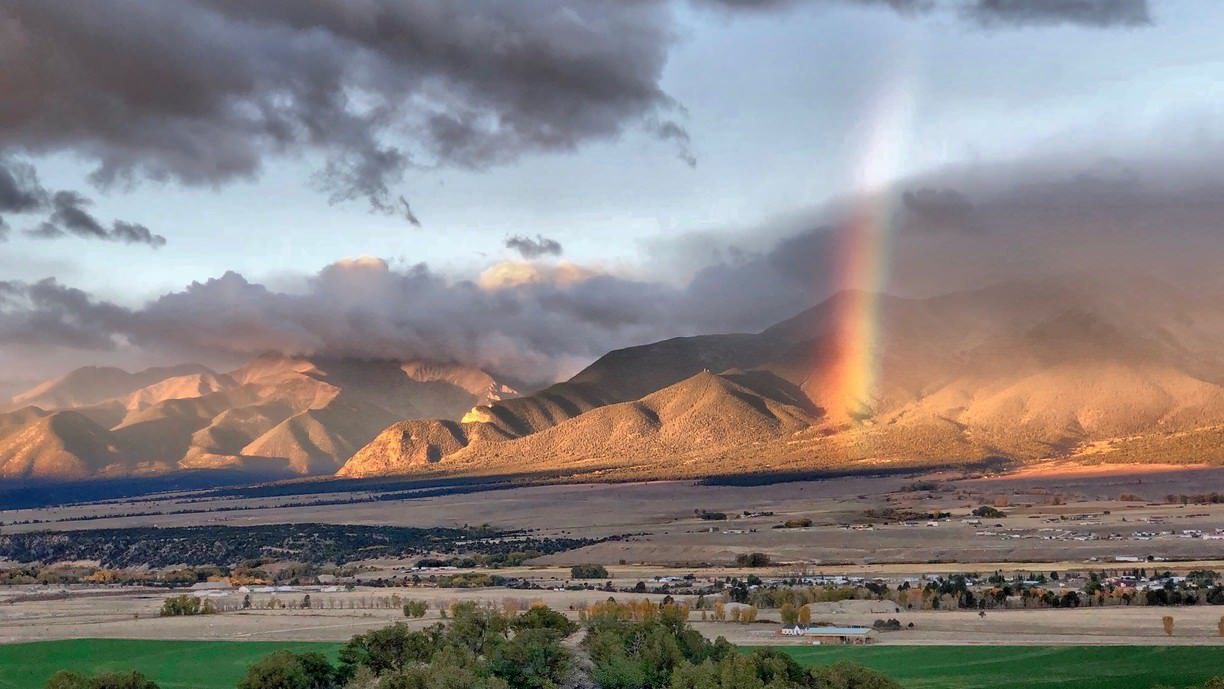
Please…Walk on the Grass

Please...Walk on the Grass

On March 18th, 1945, Private William D. McGee, a medical aid man in the 304th Infantry Regiment, made a night crossing of the Mosel River in Germany with his unit in an effort to capture the town of Mulheim. When two of his comrades were wounded crossing a minefield, Pvt McGee voluntarily entered the minefield to save their lives. After carrying one man to safety, he returned for the second. McGee stepped on a mine and it exploded. Despite his injuries, he ordered his fellow soldiers not to rescue him and risk their own safety. Pvt McGee died the next day from his injuries and was posthumously awarded the Medal of Honor.

Flash forward 78 years. It’s spring break for our two 8th-graders and we’ve decided on a trip to Europe—our first return to the continent since we moved away from Germany almost fifteen years ago. Matt and Josh have never been there.

Our daughter is stationed overseas in the service and we’re meeting her in Luxembourg, then relaxing in the Belgian countryside before she and my wife will run the Paris Marathon together.

It’s in Luxembourg, at the American Cemetery and Memorial visitor center where we read about Pvt McGee’s story. Our sons study the large maps displaying the WWII battlefields in Europe and learn where their grandfather navigated his B-17 across the English Channel, and where their great-grandfather dropped bombs from his B-25, flying north from Italy to Germany, low-level though the Alps.

The maps are interesting, but after hearing about Pvt McGee, Matt and Josh want to see his grave. We scan the crosses, looking for the gold emblem marking a Medal of Honor internment. Behind us, we hear a voice in broken English.

“Please. Please walk on the grass.”

I feel guilty. I’m unable to speak French and the security guard is obviously doing his best to keep our family off the immaculate green grass surrounding the markers.

“Sorry, sorry,” I say. “We’ll stay on the walkways.” Matt and Josh tuck in behind me, not wanting to be the ones in trouble.

“No.” The guard shakes his head. “You don’t understand.” He points out to the sea of markers, and I realize his English is not broken at all. “You cannot pay them respect for what they have done from this walkway. You must walk on the grass to see their graves.”

And we do. We find Pvt McGee’s marker and talk about his story. We find another Medal of Honor recipient Sgt Day G. Turner, and recall his citation describing how his 9-man squad captured 25 enemy soldiers after losing 6 of their own because Sgt Turner refused to surrender. We pause at the marker of Harry P. Palmer, from Colorado. We don’t know Palmer’s story, but we talk about what it would be like to know someone from our state who died in battle.

Our boys’ memories of London Bridge, the Eiffel Tower, and an awesome Indian restaurant in Belgium may eventually fade. I don’t think they will forget their visit to the Luxembourg American Cemetery. 

Night in the Pokey

In which I’m stupid…

I know, I know…the crowd of folks I ran with are looking at this title and saying, “only one night? You must not have been tryin’!”

It’s taken me a long time to put these words down on something besides an SF-86. And I’m still not going to get too specific with names and dates, OK? Let’s go with pretty close to Y2K at a Purdue homecoming game.

I’m back in the States from my duty station in Germany, going through some requalification training in the mighty C-130 Hercules (4 Fans of Freedom, Hero of the Skies…horsepower. IYKYK.) I get the call from a close Air Force friend I’ve been stationed with twice and who never fails to bring out the wild side in me.

“Road trip!” he says. The next weekend finds us driving from St. Louis to West Lafayette, Indiana, for the Purdue Boilermaker’s homecoming game. My friend’s a grad, and he spends the entire drive up regaling me with tales of the Big Bass Drum, the Silver Twins, and Breakfast Club before the game.

The next day we’re sampling the first tradition—Breakfast Club. A giant costume-wearing, drink-swilling morning event that puts you in the right mood for kickoff. Although we’ve failed in the costume department, we’re swept into the excitement and I distinctly remember enjoying two Bloody Marys before it’s time to head to the game.

I’ve decided to ditch my jacket in the car, so I arrange to meet the rest of the guys at our seats. I make it to the stadium well before kickoff, but when I enter and glance at my tickets, it’s obvious I’m at the exact opposite end from where our seats are. And a couple levels up. The stadium is only a third full and being the savvy geometry expert I am, I calculate I could probably shave 20-30 steps off my trek to our seats by walking down to the first level walkway overlooking the field and working my way over from there. 

Halfway down the stairs, a young man in a security uniform—obviously working a side hustle to help pay for school—stops me and asks, “Where you headed?”

As I wave my ticket in front of him, I think about saying “the library?” but refrain and answer, “to my seat.”

“Let me see your ticket,” he says, and sticks out his hand.

I know exactly where my seat is, but that outstretched hand thing gets me every time and I hand him my ticket. He scans it and then looks me in the eye. “That’s the other end of the stadium. You need to go back up and walk around to the C-gate.”

I stifle my “no shit, Sherlock,” thought and nod, extending my hand for my ticket. “I know where my seat is. I’m cutting across this way.” I point past the security guard toward my intended path.

“No, you’re not.” He smiles. “You been drinking?”

Now, if you haven’t done the math, I’m in my 30s and am very comfortable with a little pre-game social lubrication and my legal right to enjoy it. I smile back. “Hell yes, brother,” I say, “Enjoyed a couple down at Breakfast Club. How about you?”

His smile drops. “We don’t allow drinking at our football games.” He takes my ticket and tears it in half. I’m too shocked to point out that I’m not drinking at the game and I step toward him, my arm reaching forward to retrieve my only proof that I paid for this event.

The guard’s eyes widen as he takes a step backwards, and he fumbles for a whistle. As the shrill blast causes heads to turn our way, I squint my eyes at him, and then turn to see who he’s calling. Two uniformed policemen are shuffling down the stairs toward me, the lead officer holding a mike to his mouth, lips moving.

I start to explain, but am quickly handcuffed and escorted to a patrol car. The police say they are charging me with public intoxication and I ask for a breathalyzer. They refuse, so I remain silent for my ride to the Tippecanoe County Jail.

I never get to explain myself. Turns out public intoxication is a Class B misdemeanor and the police do not require proof to charge someone. It’s just 12 hours in the slammer and then you’re free to go.

My friends got pretty worried about my absence. Not so worried that they missed any of the game (priorities are priorities) but worried enough that they called hospitals first before calling the police. They were there to pick me up around midnight and I had a few stories to share about my cellmates (I was the only guy in there for just 12 hours.)

I spent the next several months trying unsuccessfully to get the charge expunged from my records. I spent the next twenty years having to explain what happened that day every time I re-upped my security clearance.

Once, I interviewed for a job working in the White House. The day before the actual interview, two security guys were running the pre-interview checks with me. “How about we talk about the elephant in the room?” the first guy says, because he’s read my written account of my life story. I start telling the story and I’ve just gotten to the Breakfast Club when he interrupts and says, “Hey sir, we’re talking about your $40 charge past due to Sam’s Club.” (I’d been disputing said charge for three years) He continues, “If you want to interview tomorrow, you need to clear that debt.”

A phone call later, I was debt-free.

There is no moral to this story, but I’ve used it a few times to talk about judgment. Here’s the deal: On the one hand, I can whine about “I only had two drinks, he tore up my ticket, they wouldn’t give me a breathalyzer, blah, blah.”

Or I can look back and point to a single moment. When that young security guard said “You need to go back up and walk around to the C-gate,” I could have looked him in the eye and said, “Yes, Sir.”

And it all might have gone differently.

p.s. and I would’ve seen Drew Brees and those Silver Twins!

My Name is Enrique Garcia-Ayesta

My Name is Enrique Garcia-Ayesta

For those of you Princess Bride fans, none of Enrique’s acquaintances killed my father and they do not need to “prepare to die…” If you haven’t watched the movie, I’m sorry you’ve not only missed out on classic cinema but also endured an introduction to this blog which makes no sense.


Enrique, or “Henry,” as we called him from the moment he walked through our door, entered our life when I was a junior at Montesano High School circa 1982. Our family signed up to host a foreign exchange student for the year, specifying Spanish as our language preference (I took Spanish in high school) and male for gender (there was no world in which my parents were going to allow a female high-schooler to live across the hall from my bedroom.) Enrique hailed from Bilbao in northern Spain but never failed to remind us he was a Basque, not a Spaniard.


What a special year. Enrique joined the football team as a kicker (surprise!) and had no problem fitting in at our high school. We developed a close friendship that included climbing out our bedroom window to attend “keggers” on abandoned logging roads, and lamenting about how hard my father could be to get along with (Enrique gave my dad a 1979 translation of The Nietzsche Reader for Christmas.)


At the end of the spring semester, Enrique returned home and I turned my focus toward my senior year. We missed each other. Although we weren’t much in the way of letter writers, we continued to trade correspondence through my sophomore year of college, before losing touch.


Fast forward twenty years and I’m commanding a C-130 squadron in Arkansas and flying a drug interdiction support mission to eastern Columbia (yes, the same mission I wrote about here where I “bent” our airplane.) We’ve got an overnight in Panama City, Panama and are pretty pumped about our hotel after months of living in tents in Pakistan and Oman. We walk into the hotel lobby wearing “sanitized” flight suits (all patches and identification removed) so no one will suspect we are Americans on our way to Columbia.


Yeah, right.


I’m checking in at the desk and hear a voice behind me.


“Camerón?” The accent is on the last syllable, but I recognize someone is trying to say my name, rather than the Spanish word for “shrimp.” I turn, and Enrique smiles at me.


“Enrique!” I give him a hug, and we step back and look at each other.


His hand touches his thinning hair like he’s embarrassed about it, but then he points at my balding head and says, “I wasn’t sure it was you…”


Long story short—neither of us had ever been to Panama before. Enrique was moving from London to start a cell phone company in Panama City and was checking into the hotel until he could find long-term accommodations for his family. I met his Greek wife, Athina, and their son Ektor—Enrique was a family man!


I’ve written before about my love for coincidence—as an affirmation that the impossible is actually possible. What are the odds that the two of us would randomly cross paths in a Panamanian hotel?


Enrique and I stay in touch. Our emails are infrequent, but enough such that he can ask about our kids, and I know his son is at University and they have a daughter now.


I don’t think our reunion was chance. 

Hope Is Local

Hope Is Local

I grew up reciting the Pledge of Allegiance, took an oath, spent thirty years and one month serving my country, and still feel my heart swell at our anthem’s words “that our flag was still there.” I’ve always believed our country, our democracy, and our intent should present an example to others that the best way for a people to propagate freedom is to demonstrate their values by serving as what former President Reagan termed “this shining city on the hill.”

Ronald Reagan borrowed most of this phrase from seventeenth century Puritan governor John Winthrop, who never intended the metaphor to represent a democratic ideal but rather to serve as a warning that all eyes of the world were watching to see how a Protestant colony would govern themselves in the New World.

Political discourse has always been fraught with polemic arguments and wanton emotion. The difference this century is that we no longer interpret this dialogue through a newspaper report or magazine article. The miracle of social media allows us to witness firsthand the messy, complicated, and frustrating process of governing our country. When I bring up helpful advice retrieved from my middle school days, my seventh grader often admonishes me by saying, “That’s TMI, Papa. Too much information.” That’s how I feel about political debate in the current environment. TMI.

All eyes of the world are upon our “city.” If we are shaking our heads at our own leaders, then just imagine the example we are setting abroad. But I find myself turning apathetic—almost cynical—wondering what tools the common citizen has to combat the inertia gripping this country at the national level and taking the shine out of our city.

Growing up, I took road trips with my family in a yacht-length station wagon with fake wood paneling. I whiled away the hours by heckling my two younger sisters in the back seat. Once, after a sister-squeal too many, my dad shot one hand backward and cuffed me on the side of the head while maintaining perfect steering control with the other. I was unhurt, but it surprised the heck out of me. I felt the same type of surprise when the solution to my political apathy knocked on my front door.

Looking for hope? It’s right here at home.

The mayor of my town owns an auto repair shop and changes the oil in my car as often as I remember to have it done. (His reminders help.) He also leads a board of trustees that runs our community. I am amazed every day at how well they do their jobs.

Our local leaders are fixing chronic shortages in low-income housing and are directly addressing environmental damage on our town’s perimeter. Together, they are figuring out how to attract the tourists that keep our economic engine chugging without neglecting the essence that makes us a community. All in a nonpartisan effort to make our home better.

We live in a small town made up of a trifecta of worldviews. We’ve got the young folks barely hanging on out here as they guide river rafts, climb mountains, and try to make a living through outdoor adventure. They tend to lean to the left. There are also the local locals, longtime residents who pretty much make everything happen. They trend to the right. Finally, we’ve got the crowd that already made their fortune and are living their best lives in their mountain retirement home (or second home). It is hard to generalize with this crowd, but they are set in their ways, and they all lean one way or another.

Everybody here has a political worldview, but they don’t use it at the local level to divide or split us apart. Out here, we get things done. And in between making our community a better place, we celebrate together: an annual town dinner with rows of tables running the length of Main Street—all four blocks; an impromptu parade for a football team leaving for the state semifinals; and a Chocolate Walk celebrating local businesses.

I haven’t sworn off social media yet, but I’m proposing a new filter. I want to select “within ten miles” for my news feed because that’s where our country is getting things done. And that’s where I find hope. 

* My friend and talented author/essayist Jerry Fabyanic graciously included my essay above in his book Food for Thought: Essays on Mind and Spirit Volume Two published this past fall. If you’re interested in reading more, the collection is available on Amazon here.

A Better Place to Be

A Better Place to Be

Harry Chapin tops my list of favorite writers. I know music aficionados out there are shaking your heads. No one who remembers this 20th century folk icon thinks of him as a writer first. They picture a singer, a guitarist, and a storyteller. But I’ll argue all day that Chapin’s use of tone and mood put him square in the writer category.

New writers often struggle with the basic terms. What’s the difference between the tone of a piece and the mood created? It’s simple to define—but sometimes hard to identify.

Tone is the author’s attitude about what they wrote and it’s aimed at the reader. Words like formal, angry, and humorous often describe the writer’s tone.

Mood is the feeling the reader gets when they read the author’s words. When reading Lewis Carroll’s Alice’s Adventures in Wonderland,

“Do you know, I always thought unicorns were fabulous monsters, too? I never saw one alive before!”

“Well, now that we have seen each other,” said the unicorn, “if you believe in me, I’ll believe in you.”

you might experience a mood described by words like whimsical, amusing, or fantastical.

Chapin used words, volume, tempo, and texture to deliver a distinctive tone and create a mood for his listeners…and he did it better than most. Look at the lyrics to Taxi or play the song here. Chapin’s tone is frustration—especially when he belts out the refrain, “I’ve got something inside me, to drive a princess blind…” But the mood he creates is nostalgic sadness. The listener warms at the story of past love but knows there’s no chance at reigniting it, especially after the line “Another man never would have let her go…I stashed the bill in my shirt.” 30,000 Pounds of Bananas blasts a tone of satire, but the mood created with changes in tempo (and Big John’s humorous inputs) is comedic horror as the listener perches on the edge of their seat waiting for the bottom of that hill.

A Better Place to Be captures Chapin’s talents best. (Warning: this is one of Chapin’s longest songs, so only keep reading and clicking links if you haven’t had enough Chapin for today—otherwise skip to the end of this blog) Written in 1972, this song remained Chapin’s favorite—a story about lonely people.

Chapin’s tone in this piece is sadness—a depressing sadness. The mood he creates is one of loneliness—the desperate need for human connection. To see how he uses his music for tone and mood, you can listen to the song here. Note his changes in musical tone between characters, his crescendos (…came back with my paper bag,) and tempo (shhhhh…I know just how you feel.)

But I’m a sucker for words and want to highlight some examples of how Chapin used them for tone and mood (full lyrics here):

        an early morning bar room,” “started at his cups,” “fight her lonely nights,” and the little man not acknowledging the bar maid, all serve to create the sad and depressed tone Chapin intended. 

        Nothing creates a mood of loneliness and despair like a dead-end job where “(sic) you watch the metal rusting and watch the time go by.” Later, we see a man so cynical about his chance for an emotional relationship that he’s given up on making a friend and settled on just making a play.“…but I decided to glide on over and give her one good try.” 

        The man tries to turn on the light in the room but the woman asks him to leave it off. She can’t bear to see herself so low. But she needs someone or something as bad (or more) as the little man and says, “Anywhere’s a better place to be.” Desperate loneliness. 

        Chapin ends his song in a more depressing tone than the beginning. The waitress is so sad about the man’s story and so sad about her own loneliness, she offers herself to him. And Chapin, the writer, slyly slips from sad to cynical as the little man “smiled a crooked grin,” and agreed to take her home.

I don’t consider myself a musician (sorry, Mr. Nelson—you did your best) and I haven’t done justice to how Chapin crafted his music (outside of his lyrics) to provide tone and mood. I feel it…I sense it…I just don’t know how to describe it. But I recognize good writing when I see it. You can get away with a non-literary line like “I did not want to share her, or dare to break the mood; So before she woke, I went out to buy us both some food,” if you have created tone and mood such that the reader/listener is hanging on your every word.

Harry Chapin did that for us with his stories. Thanks, Harry!

p.s. A link for everyone saying, “but you left out Cat’s in the Cradle…”


A Few Eggs Short of a Dozen

A Few Eggs Short of a Dozen

While our family tries its best to sit down together every night for dinner, it just doesn’t always work out. There’s Boy Scouts on Tuesday, a Zoom meeting every other Wednesday, and…to be perfectly honest, its football season!

These are legitimate reasons to announce to our household’s two remaining minors: “It’s make your own dinner night.” Loud rejoicing usually follows, much to our consternation. We adults have “game” when it comes to cooking, and this reaction never fails to chip away at the ego.

But the boys aren’t bad chefs themselves. They have taken one of our ancient family secrets and upped the game. Since you’ve read this far, I’ll share it: EVERYTHING TASTES BETTER WITH AN EGG (or two) IN/ON IT. Our Top 5 regulars are listed below:

RAMEN: Our 110lb middle linebacker is a soup addict. If you can pour it, he will eat it. But his go-to soup for breakfast, lunch, and dinner is ramen. With an egg. And a bunch of other stuff…but I digress.

RICE: Our 97lb defensive end (did I mention how small our high school is? These guys were middle school starters!) goes for rice. Does he put an egg in it? Not on day one. But there’s no holding back if it comes out of the fridge on day two. You know how that rice can get all hard in the fridge? The egg fixes that.

BURGERS: Questions? It goes right on the patty, sunny side up. Bring a napkin.

FRIED SALAD: I wish those boys ate more salad. Alas, this favorite is mine (the family vegetarian.) You take the salad that’s been in the fridge just to the point where it probably should be tossed out instead of just tossed. Open the lid and sniff. Remind yourself how the cost of produce has skyrocketed. Then dump it in the frying pan with olive oil and garlic. Fry on high for three minutes, make a hole in the middle and crack your egg. Flip after a minute and sprinkle on a layer of cheese. Don’t get no better.

LEFTOVERS: Mix everything together in a large frying pan and fry on high. Add an egg or two to give the mass enough consistency to form a Leftover Pancake. Add cheese on top. Bring on the sriracha.

The daily egg consumption is subtle—“Papa, I only used one…”—but consistent. I do the bulk of the grocery shopping and I’m not sure it’s normal to buy two 18-egg cartons once a week.

Or is it?

Let me know your go-to recipes with egg…or suggestions on cutting back!

Welcome to the Jungle (It Gets Worse Here Every Day)

Welcome to the Jungle--It Gets Worse Here Every Day

In which I’m driving in a parking lot accident…inside a $30M aircraft

It’s autumn of 2003 and our C-130 unit is still running balls to the wall supporting the Global War on Terror. In the past twelve months, we’ve moved from Pakistan—flying night low-level airdrops into Afghanistan—to Oman, where we supported the initial invasion of Iraq. We’re given four months back home at our base in Arkansas to “recharge” before we deploy to Qatar for another round of “fun in the sun.” Lots of hugs and kisses (and tears) as we return home from the desert and settle in for a temporary round of family life.

I’m the commander of this unit and I’d love to tell you morale is high. But it’s not. We’ve all been on the move since 9-11 and there’s no end in sight. Our families know this is just a stopover to get the aircraft overhauled and try to restore some sanity for our airmen and our spouses. Unfortunately, I get more than one aviator in my office, head hung low, explaining how they are trying to reestablish control of the household, only to discover their presence is superfluous. Those guarding the home front managed things just fine while our fliers were gone and certainly didn’t need advice on how to keep a tight ship.

So, it’s no surprise when a month or two after we get back, I’ve got aircrews ready to get back on the road. Not to the desert, boss—I can wait for that. But how about that three-day mission through Vegas? Or what about that Alaska trip? And I’m just as guilty. A four-day trip to South America pops up and I’m thinking to myself…the commander needs to keep up his flying currency as well, right? What I don’t realize is this little hop down south will result in more updates to my currency than I’m asking for.

Here’s the mission: Deliver Combat Rubber Raiding Craft (CRRC—also known as Zodiacs) to a remote airfield in Columbia. Are there other details? Yes. But we just deliver beans and bullets, so we aren’t privy to the “why” and I likely wouldn’t be able to share them here if I was. President Bush’s Plan Columbia is in full swing and our special operators probably have a menu of options: 1) destroy drugs 2) eliminate drug traffickers 3) train Columbian forces in counter-terror operations 4) tell their grandkids about whitewater rafting east of the Andes…

I’ve got a young crew. Normally, the scheduler would have fixed that. Regardless of how good the commander thinks he or she flies the plane, the mid-level captains are convinced we just do paperwork, go to meetings, and suck up to those above us—we’ve no business behind the yoke without adult supervision. They’ve done well with their choice of an engineer—he’s crustier than I am—but the rest of the crew has a combined time in the squadron of about six years. And I should have recognized that taking only one loadmaster (who’s never flown outside the US) with a plane stuffed with bulky rafts is probably not fair to the young man.

We overnight in Panama City, Panama. The next day, we drop into Cali, Columbia for gas before the final leg into our narrow 3K’ strip east of the Andes. All is well.

Our mission planning warns us we need to ensure there are no other large aircraft on the ground before we land at our final destination. There is no taxiway, just an off-ramp of corrugated metal mats forming a path through the mud off the end of the runway. If a plane is on the ground and another lands, there is no legal way for the plane on the ground to get to the runway and no way for the landing plane to turn around and take off again.

We call with these questions and request clearance to land. The combination of broken English and great Spanish was clear enough for us. We’re cleared to land.

We put the plane down on brick one and I silently smirk at those silly schedulers worried about my rusty pilot skills. My smile fades about 2K feet down the runway as I see the telltale triangle of another C-130 tail loom into view.

          “You see that, boss?” My engineer asks.

          “Yep.”

          “Yep.” He replies.

We stop on the runway and get the other C-130 on the radio. Its props are turning and they are ready to go. They’re none too happy with our arrival and the resulting delay in their departure. After a few minutes of coordination, we come up with a plan. The other aircraft will hug the eastern side of the metal mats, while we hug the west. The only way it will work is if one of our aircraft allows its nosewheel to go off the metal and into the mud while turning. Since we’re the ones in the wrong, (landed with another C-130 on the ground already) we get to do the nosewheel maneuver.

And it works! Some US contractors are out helping clear the wings, and we’re able to maneuver ourselves past the other plane so that our tail end points toward their “ramp” where several single-engine aircraft are parked. My nosewheel is still in the mud, but it’s maneuverable. The other C-130 takes off.

While the copilot and I head into a tent to use a SAT phone and let our headquarters know we made it, the engineer is checking out my nosewheel and shaking his head, and the navigator is doing…well, she’s doing that nav stuff.

No one’s watching our young loadmaster who has a bunch of jungle-fevered contractors yelling at him to hurry as he works through his checklists. He flawlessly offloads the rafts, but as he raises the ramp at the rear of the aircraft, he forgets an important step: Ensure Door is Clear. Unfortunately, one of the “helpers” has left a tie-down strap in the clamshell area of the door and when the hydraulics complete their cycle, thousands of pounds of pressure punch the buckle of the strap through the skin of the aircraft. We now have a hole in the airplane.

I can’t believe it. I’d just Q3’d (disqualified) a crew in Afghanistan for bending metal on the aircraft when they took out a light stand. Not their fault. Definitely their responsibility. Those are two different things. Now here we were in peacetime, in daylight, on a milk run. Bending metal.

I get permission to fly the aircraft back and we prepare for takeoff. The first thing we have to do is back the aircraft on the metal matting so the nosewheel is back on a solid surface to turn toward the runway. I’ve got spotters on both wings to make sure we don’t bump anything while reversing, and the loadmaster is watching out the back end to ensure sure we don’t hit any of the single-engine aircraft. The last time I had this much attention on my back end was at my annual flight physical.

We move backwards approximately ten feet when there is a sudden metal-on-metal screeching sound so loud it penetrates our ear protection. I stop reversing.

“What was that?” The nav asks.

“That’s the sound of my career ending,” I reply, never at a loss for a smart-ass remark, regardless of circumstances.

We shut down and survey the damage. As the weight of the main wheels sank into the rear of the metal matting, it caused the front end of the matting to “pop a wheelie” out of the mud and into the bottom of the aircraft. Since all eyes are on the wings and tail of the airplane, no one notices the metal scraping our underbelly until it collides with the nose gear door and shears it partway off.

While the engineer hack-saws the remaining portion of the gear door off the aircraft, I make my SAT phone calls, first to my boss back home. Then to headquarters. I brief my commander my policy of “bending metal” and how I need to be Q3’d. He tells me I don’t need tell him that. Get that plane home and I’ll have the disqualification paperwork waiting when you walk down the steps.

And so we do. Flying under 150 knots (that’s slow even for a Herk) and below 10K’ (except for an hour on oxygen when we climb over the Andes) we limp home over the next several days. We stop for an overnight again in Panama. No beer. We just sulk. And then back to the states.

They say you can’t recover from a taxi accident and you can kiss your career goodbye if you have a Q3 in your records. I have both because of our little Columbian adventure. Back in Arkansas, I take two proficiency rides with an instructor, where they review important things I know, but didn’t utilize on my mission:

-if you’re unsure about your landing environment and will not get shot down, then do a fly-by and check things out

-if you’ve got an inexperienced crewmember under pressure, don’t leave them alone so you can get a cup of coffee and make a phone call

-if you’re backing up, ensure you have people watching the whole aircraft and not just the back end.

I take my check ride a week later and return to qualified status. By the end of the month, I’m commanding a deployed squadron in Qatar, and we’re doing great things for our troops in Iraq. Even get to send an aircraft to Iran with relief supplies after an earthquake. I take special joy in putting a female pilot in command of that mission.

I’m never sure whether my career continues because it’s a time of war and we need the bodies, or because I’m a commander and someone is taking care of me. I like to think the decision was in higher hands than those.

But I still think that responsibility thing is pretty important.

Page 2 of 3

Powered by WordPress & Theme by Anders Norén